Few years ago, most AI training work consists of just typing labels on text, rating the answers the LLM (large language models) generates or marking the incorrect answers on a rubric spreadsheet. That part of AI training still exists but the AI training landscape is evolving. Companies need people that can listen to a voice assistant and rate its sound, determine if an AI generated image and video adheres to the prompting and where the output breaks down.
This type of AI training is called multimodal AI training. It's one of the fastest growing corners of AI economy and it's a real opportunity for people in the UK, the US, Canada, Australia, Germany and all over. The problem is that most people who are looking for jobs still consider "AI training" to be one generic task. It isn't anymore. It's broken down into lanes and knowing which lane you're in is the key between a few scattered gigs and a paying, successful skill set.
In this article, you will learn about what’s involved in multimodal AI training, why voice, image, and video have separated into their own specializations, and where you can fit in as a linguist, photographer, video editor, or non-techie.
The Meaning of Multimodal and its Importance Today
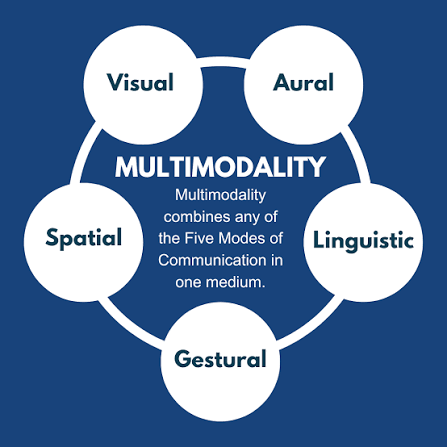
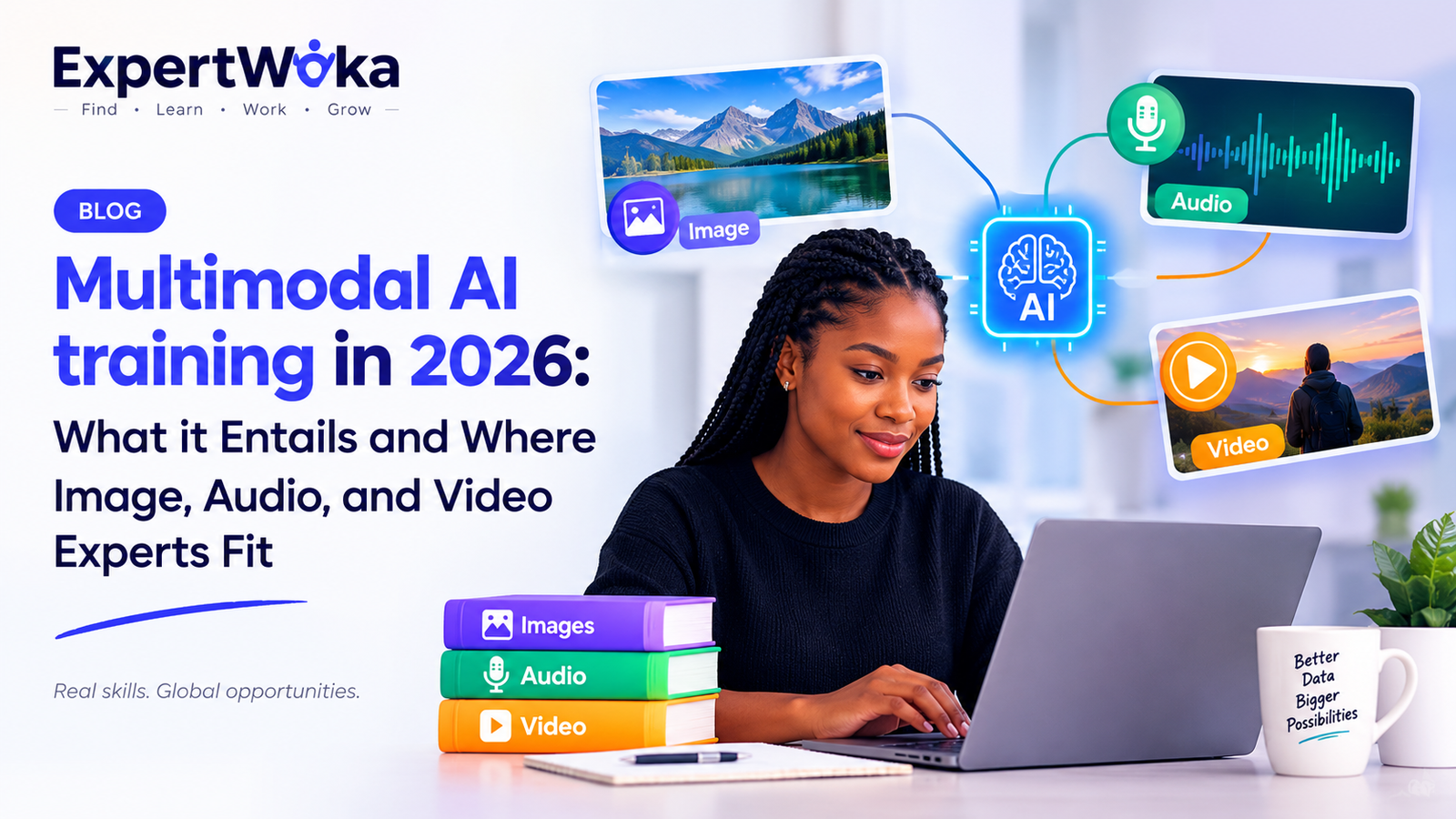
A multimodal AI model is an AI system that is capable of handling multiple types of data, such as text, images, videos, and audio. It can also hear, see and watch video and reply to it, sometimes in all three formats. Picture an assistant that can look at a photo of your fridge and suggest a recipe, or a device that can watch a video clip and explain what is occurring in the clip in natural language. That is multimodal AI at work.
Training these systems differ from a text only-chatbot. A model which works for voice requires individuals with an understanding of pacing, tone, accent and emotional context of language. Anyone who creates or evaluates images must be able to spot when the hands are false, the mirror is cracked or the shots are not culturally accurate. A video-based model must have individuals who have the ability to check for consistency over hundreds of frames - something that is not possible to test with just a still image.
As of 2026, the major AI labs, as well as smaller specialist startups, have mostly abandoned the use of the phrase "data labeling" as one undifferentiated task and have replaced it with the more descriptive "labeling and annotation." They're creating different pipelines, different contractors, different salaries for voice, image and video. It is this specialization that is making room for those with a practical skill that can be applied to real-world situations.
The Three Lanes: Voice, Image, and Video:
Voice AI Training
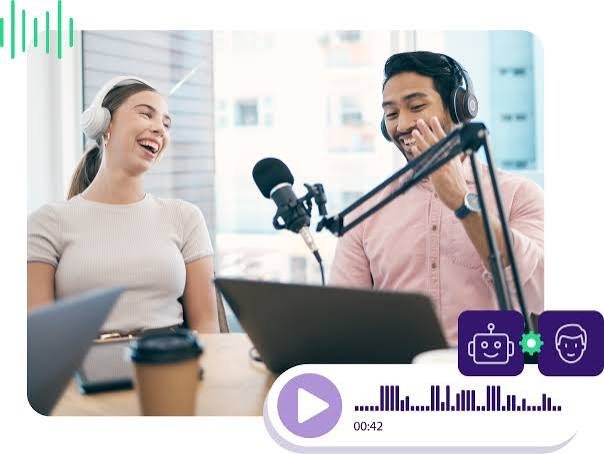
Voice is arguably the most human–sensitive of the three. Even if a model’s words are correct, they still may sound robotic, stuffy, or insensitive to the context. This is where voice AI trainers can help.
Typical tasks include:
Rating the naturalness, pacing and emotional appropriateness of synthetic speech.
Detail most transcription jobs overlook, including pauses, overlapping speech or sarcasm, is transcribed and annotated.
Comparing and evaluating and describing (in writing) which of two AIs sounds more human than another.
Highlighting accent bias, the poorer performance an accented speaker or non-native speaker may experience on a model.
Producing speech samples in particular languages, dialects or emotional states and recording them to train or tune a model.
The people who tend to do this well are linguists, voice over artists, call centre veterans, language teachers and those who have spent many years listening to individuals talk rather than what a script says. The advantage goes to multilingual speakers as labs are working to bridge the gap between how good their models are at recognizing English and German, French, Portuguese, or less-spoken languages.
Image AI Training
There are two major types of image processing: generation and understanding.
Generation is the kind of AI that generates an image based on a prompt, while understanding is the type of AI that infers a meaning from a picture (like "what's wrong with this picture" or "tell me about this picture if I can't see it," for instance).
Typical tasks include:
Checking AI-generated photos for any human anatomy inaccuracies, lighting problems or impossible features like having six fingers instead of five.
Producing accurate and detailed descriptions and interpretation in captions, including spatial relationships, lighting and mood (effect).
Analyzing and evaluating the output of two models to make a reasoned judgement about which is more likely to answer a prompt accurately.
Ensuring that a model does not portray bias toward particular ethnicities, body types, ages or cultural environments.
Checking for special cases, such as reflections, transparent materials or intricate hand poses.
Good for photographers, graphic designers, illustrators, art directors and those with an aptitude for visual detail. You know and can tell when a stock photo isn't exactly right – that's what they're looking for here!
Video AI Training
The latest, and indeed toughest of the three lanes is video, which requires the skills of the image lane and is further complicated by the dimension of time. A model needs to remain consistent throughout the clip (a shirt shouldn't go from one color to another halfway through a clip) and physics must follow (when an object is moving, it should move in a realistic way).
Typical tasks include:
Checking for consistency errors in the generated video, e.g. flickering details and objects that warp half the way through the video.
Marking actions and events with real footage and giving timing to events and what happens.
Determining the correctness of a video response over elapsed time of a multi-step instruction.
Measuring the synchronisation of audio and visual information (as many video models generate audio in parallel to the image today).
Writing dense time-coded descriptions that include details of sequences of events (not just one image).
It’s best suited for those who already work in the world of video edits, film and media students, animators, content creators, and anyone else who works in the world of shots, cuts, and continuity. A skill that you've already picked up in the movie production is a transferable skill here.
This is a Global opportunity, not a Local Opportunity
Many people think these types of roles are limited to a select few tech hubs, such as Silicon Valley, or to candidates who are there. That's outdated. In 2026, most multimodal AI training jobs are contract-based, remote and platform-focused, meaning your location has a bigger impact on what jobs you'll be eligible to do than if you will be able to do them.
The demand for voice/language annotation is high in the UK and Germany, particularly from labs that wish to better the performance of their models in European languages and the regional dialects for most African countries like Nigeria and South African. In the United States and Canada, image and video review positions are numerous and frequently related to significant model releases that must go through the process of many human “eyes” to be released for publication.
All of these markets share a common factor: companies must have native or near-native fluency in certain languages, be attentive to detail, and have a good internet connection. They don't necessarily need to be computer science majors. Many of the best-performing contractors in this space are entirely different from the domain in which the AI lab performs, such as teaching, design, journalism, customer service, etc. and simply have domain expertise the AI labs don't have on staff.
How To Get Started
If you are reading this and saying to yourself "This sounds interesting, but where do I even start?," this is a real way to go:
Identify your strongest lane first: Don't attempt to perform all three in the same session in the beginning. If you are a strong writer and have a good ear, begin working with voice or text adjacent work. For people with a design or photography background, begin with image. If you have created and edited videos professionally, then that's your lane.
Develop a small portfolio of judgment, not just skill. Employers looking for this kind of job don't really care about your CV, they would just like to see how well you are able to pitch your thinking clearly. Get used to drafting short and specific critiques of AI-produced online content. That habit will be make you standout in screening tests.
Get comfortable with ambiguity. Much of this work involves judgment calls, where there's no single correct answer. Labs want individuals who can think creatively, rather than strictly along the lines of a script.
Apply broadly and expect a selection process. Before you are fully committed to most AI lab platform, most of them have a paid assessment or trial task. This is not a formality, treat it as a real job interview.
Keep up-to-date on changes. The field is moving very quickly. It's possible that a task that used to be done manually now has part of it automated, and more new task types come along as fast as they can be automated. Individuals who continue to learn remain in the workforce longer than those who learn just one specific task and then never do it again.
If you are interested in a more structured approach to delve deeper into positions such as this, and at the same time give a wider overview of where opportunities exist in the field of AI-related work across a range of skill sets and how to position yourself, then you should definitely visit Expertwoka's opportunities page, which gives a comprehensive overview of current and vetted openings on multimodal AI training opportunities and application links.
Misconceptions That are Common to Clear up:
- "You need to be a programmer". Not for these roles. Knowing how to utilize a Web-based annotation tool is typically the level of technical expertise needed. You value is NOT in code, you value is in judgment, language skill and attention to detail.
- "It's like data entry". In early-stage, AI labelling was more akin to data entry. Multimodal training particularly for voice and video is more of editorial or quality. You are being paid to think, not just click.
- Low pay across boards. Payment is very variable, depending on the difficulty of the work and its language or skill level. Less common language pairs and specialized domain knowledge (medical, legal, technical) and Senior Reviewer are paid much more than general purpose jobs. Rates for this space have also increased because there is an increasing demand for human judgment of high quality, but not enough qualified human reviewers.
- Once the AI is good enough, this work will be gone. It's the opposite. To make meaningful errors, models must become more capable, and the more they grow in capability, the more complex and subtle the errors that need to be caught need to be.