

AI training jobs involve more than simply reading chatbot responses and deciding whether they sound good. Many companies need human evaluators to assess AI-generated answers against specific guidelines. These roles appear under different titles, including AI Trainer, Model Evaluator, AI Rater, and LLM Evaluator. Although the job titles vary, many involve the same essential skill: judging AI responses against clearly defined standards.
The challenge is that grading AI responses is not always as straightforward as it looks. You might receive a task with twelve evaluation criteria, detailed scoring instructions, and examples of acceptable and unacceptable answers. You may also be expected to maintain the same level of accuracy across hundreds of tasks.
This is where rubric-based grading becomes important. Understanding how to interpret evaluation criteria and apply them consistently can make a significant difference in your performance. It can also help you qualify for more advanced responsibilities, including quality assurance and reviewer positions.
This guide explains what rubric-based grading involves, how evaluation criteria work, the mistakes to avoid, and how to develop the skills needed to become a reliable AI evaluator.
What Rubric-Based Grading Actually Means
Rubric-based grading is the process of evaluating an AI-generated response against a set of predefined criteria. Instead of relying on your personal opinion, you follow written instructions that explain what makes a response acceptable, partially acceptable, or incorrect. The goal is to make every assessment consistent, measurable, and relevant to the task.
Think about how a teacher grades an essay. A good teacher does not simply read the essay and decide whether they like it. They use a marking scheme to assess the student's understanding, argument, structure, grammar, and relevance. Each category has specific expectations, and the final grade reflects how well the student meets them.
AI training jobs follow a similar approach. The difference is that the work involves evaluating responses generated by an artificial intelligence model rather than student essays. You receive a prompt, one or more AI-generated responses, and a rubric explaining how to assess them.
Companies operating in the AI training and data services industry, including Scale AI, Appen, Micro1, TELUS Digital AI, DataAnnotation, Invisible Technologies, and Surge AI, offer different forms of human evaluation and AI data work. The exact assessment process depends on the company and project. Some tasks involve scoring individual responses, while others require comparing two answers or identifying specific errors.
Understanding the purpose of your evaluation is equally important. Human feedback can contribute to improving how AI models respond to instructions, handle information, and communicate with users. For example, IBM explains the fundamentals of AI models and how they work. Your job as an evaluator is to provide reliable feedback that helps identify where these systems perform well and where they need improvement.
Why Rubrics Exist in the First Place
You might wonder why AI companies cannot simply allow evaluators to use their personal judgment. The problem is that people do not always interpret quality in the same way. What one person considers an excellent response might seem incomplete or poorly structured to another.
Imagine asking ten people to rate the same AI-generated answer from 1 to 10 without providing any guidelines. Some might focus on factual accuracy, while others pay more attention to grammar, tone, or presentation. Their scores could vary considerably, even though they are evaluating the same response.
A rubric helps reduce these differences by establishing a shared standard. It explains what evaluators should look for and how they should score each requirement. This makes the evaluation process more structured and helps companies collect feedback they can compare and analyse.
This is also why rubric literacy is such a valuable skill. Once you understand how to interpret evaluation instructions and apply them accurately, you can adapt to different AI training projects and assessment formats. You will still need to learn each project's specific guidelines, but you will have a stronger foundation to build on.
Breaking Down Evaluation Criteria
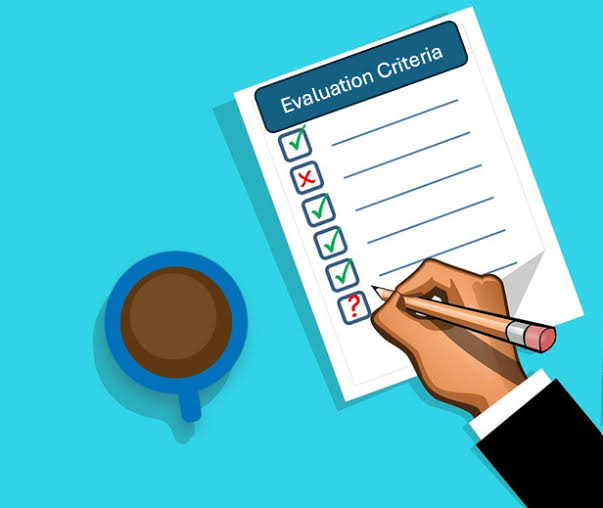
Most AI evaluation rubrics contain several recurring criteria. Their names and definitions may differ between projects, but the underlying principles are often similar. Understanding these categories will help you recognise what a task expects before you begin grading.
- Accuracy and factual correctness: This measures whether the information in an AI response is true and supported by reliable facts. It is particularly important in tasks involving science, medicine, law, finance, coding, and other technical subjects. A response may be grammatically perfect but still receive a poor score if it contains incorrect information.
- Helpfulness and relevance: This criterion examines whether the response actually addresses the user's request. An answer can contain useful information but still fail if it avoids the main question or focuses on unrelated details. Evaluators must distinguish between a response that sounds intelligent and one that genuinely solves the user's problem.
- Instruction following: This measures how well the AI follows the specific requirements in the prompt. These may include word limits, formatting, tone, language, and other restrictions. For example, if a user requests three sentences and the model produces six paragraphs, it has failed to follow the instruction even if the information is accurate.
- Safety and harm avoidance: This focuses on whether the response avoids dangerous, harmful, discriminatory, or otherwise inappropriate content. Evaluators must consider both obvious safety violations and more subtle problems in the way information is presented. The exact requirements depend on the project's safety policies and evaluation guidelines.
- Coherence and clarity: This examines whether the response is understandable, logically organised, and easy to follow. A technically correct answer may still be difficult to use if its ideas are poorly arranged or its explanations are confusing. Good responses should communicate information clearly without unnecessary complexity.
- Completeness: This measures whether the response addresses all the important parts of the user's request. If someone asks for five examples and the AI provides only three, the answer is incomplete. Evaluators should check the original prompt carefully before deciding whether anything important is missing.
Most projects combine several of these criteria into a scoring sheet. Some use numerical scales, such as 1–5 or 1–7, while others use labels such as Pass, Fail, or Partially Meets Expectations. You may also be asked to compare two responses and decide which one performs better. Always read the project's instructions because scoring systems and evaluation requirements can differ considerably.
A Practical Example of Rubric-Based Grading
The easiest way to understand rubric-based grading is to work through an example. Consider a task in which an AI model receives the following prompt: "Explain how compound interest works to someone who has never studied finance." The model produces an answer that is technically correct but uses terms such as "principal," "exponential growth," and "capitalisation" without explaining what they mean.
Now consider how an evaluator might assess the response using a simple rubric.
Accuracy: Pass. The information provided is factually correct, and the explanation does not contain any obvious mathematical errors. The model understands the basic concept of compound interest and describes it accurately.
Instruction following: Partial fail. The user specifically requested an explanation suitable for someone without a finance background. Using technical terms without defining them does not fully meet that requirement. The model followed the general topic but missed an important part of the instruction.
Clarity: Partial fail. The explanation may be logically arranged, but the unfamiliar vocabulary makes it difficult for a beginner to understand. A simpler explanation would communicate the same information more effectively. The response therefore loses marks for accessibility.
Helpfulness: Partial fail. Although the answer contains correct information, it does not fully help the intended reader understand the concept. Someone unfamiliar with finance may finish reading without understanding how compound interest works. The response needs clearer explanations and practical examples.
Now compare that answer with a second response. This version defines each financial term, uses a simple example of savings growing over time, and explains how interest can accumulate. It also keeps the explanation concise and avoids unnecessary technical language.
The second response would score better because it addresses the user's actual needs. It is not necessarily more sophisticated, but it follows the instructions and communicates the information more effectively. This is the level of attention expected from a good evaluator.
The important lesson is that you are not grading based on personal preference. You are checking whether the response meets the specific requirements of the task. A response can sound impressive and still fail several evaluation criteria.
Common Mistakes Graders Make
Even people with strong writing and analytical skills can struggle when they first begin AI evaluation work. Most early mistakes happen because graders misunderstand the rubric, rush through tasks, or rely too heavily on personal judgment. Recognising these problems early can help you improve your accuracy and maintain consistent performance.
1. Grading on gut feeling instead of the rubric
This is one of the most common mistakes among new evaluators. A response sounds convincing, so the grader gives it a high score without checking every requirement. However, the rubric exists to provide an objective standard for the task. Always follow the written criteria rather than relying on your first impression.
2. Skimming the prompt
Some evaluators move straight to the AI-generated response without carefully reading the original question. This makes it easy to overlook important requirements or misunderstand what the user wanted. Always read the prompt first and identify its main instructions before assessing the answer.
3. Inconsistency across similar tasks
Imagine giving one response a score of 4 because it contains a minor factual omission, then giving another response a score of 2 for almost the same issue. Such differences can indicate inconsistent grading. Reviewers may notice these patterns during quality checks, so pay attention to how you assess similar cases throughout a project.
4. Letting length signal quality
Longer responses can appear more detailed, but additional words do not automatically make an answer better. A short response may be more useful if it provides exactly what the user requested. Evaluate accuracy, relevance, and completeness rather than assuming that longer answers deserve higher scores.
5. Ignoring the edge cases in the rubric's instructions
Some evaluation guidelines contain special rules that are easy to miss. For example, a project may instruct graders not to penalise minor grammar mistakes or explain that safety violations should receive particular attention. These details can significantly affect the final score. Read the entire rubric, including footnotes, examples, and exceptions.
6. Rushing for volume
Some projects pay per completed task, which can encourage evaluators to prioritise speed over accuracy. However, rushing through assignments increases the likelihood of missed instructions and incorrect scores. Many platforms use quality checks to monitor evaluator performance, and repeated mistakes can affect continued project access. Build accuracy first and improve your speed as you become more familiar with the work.
7. Overcorrecting toward harshness or leniency
Receiving negative feedback can make new graders question their judgment. Some respond by becoming unnecessarily strict, while others become too generous to avoid further corrections. Neither approach solves the problem. Study the feedback, understand the specific mistake, and adjust your grading to match the actual rubric.
Also Read: AI Training Jobs With No Experience: A Beginner's Guide to Getting Started
How to Actually Develop This Skill
Rubric-based grading is a skill you can develop through practice. You do not need to be an experienced AI researcher to understand evaluation criteria or identify poor responses. What matters is your ability to read instructions carefully, think critically, and apply the same standards consistently.
1. Read the full rubric before starting any task.
Do not rely on a quick scan of the instructions. Read each criterion carefully and understand what the project considers acceptable or unacceptable. If the guidelines include sample responses, study them because they often show how the scoring system works in practice.
2. Practise with calibration sets.
Some AI training projects provide sample tasks with expected scores or reference explanations. These exercises help you compare your judgment with the project's evaluation standards before working on live assignments. Take them seriously because they can reveal misunderstandings before those mistakes affect your actual performance.
3. Build a personal checklist.
A checklist can help you remember the important evaluation criteria when working through repetitive tasks. Your questions might include: Did the response answer the actual question? Did it follow the requested format? Are its claims accurate, and is the explanation clear and safe? Using the same checklist consistently can reduce careless omissions.
4. Slow down during your first week on a new project.
Every project has its own requirements, even when the tasks appear similar. A response that passes on one project might fail on another because the scoring criteria are different. Use your first assignments to understand the guidelines and learn the expected quality standards before increasing your speed.
5. Study your rejected tasks and reviewer feedback.
If a reviewer identifies an error in your assessment, do not simply correct the score and move on. Find out why your original judgment was wrong and identify the criterion you misunderstood. Learning from repeated mistakes is one of the most effective ways to improve your evaluation skills.
6. Read outside your usual subject area.
AI training projects cover many topics, including technology, business, science, education, healthcare, and creative writing. Developing general knowledge across different subjects can help you recognise questionable claims and understand unfamiliar terminology. You do not need to become an expert in every field, but knowing how to research unfamiliar topics responsibly is valuable.
7. Learn to separate "well written" from "correct."
This is one of the most important habits you can develop as an AI evaluator. A response may sound confident, professional, and convincing while containing serious factual errors. Train yourself to ask whether the information is actually correct and whether it meets the user's instructions. Never confuse polished writing with reliable information.
You can also strengthen your understanding through structured learning. ExpertWoka's AI Training Fundamentals course introduces important concepts such as evaluation guidelines, quality checks, common grading mistakes, and practical assessment exercises. It provides a useful starting point for people who want to understand how human evaluation contributes to AI development.
Why This Skill Pays Off Beyond the Task Itself
Becoming good at rubric-based grading can open opportunities beyond entry-level AI evaluation. Experienced and reliable graders may be considered for responsibilities such as quality assurance, calibration, and reviewing other evaluators' work. These positions often require stronger analytical skills and a deeper understanding of project guidelines.
The skills are also transferable to other industries. Learning to assess information against defined standards can be useful in technical writing, proofreading, content moderation, software quality assurance, academic assessment, and research. These roles may have different requirements, but they share the need for careful judgment and consistent evaluation.
Rubric literacy can also provide a foundation for more specialised AI training opportunities. As you gain experience, you may explore areas such as red-teaming, prompt evaluation, response writing, factuality assessment, and domain-specific model review. Some of these positions require additional qualifications or technical knowledge, so it is important to check their individual requirements.
If you are considering AI training as a longer-term income opportunity, do not limit your search to basic grading tasks. Explore the different roles available, identify the skills they require, and look for projects that match your experience. You can browse current openings through ExpertWoka's AI Opportunities page, which features opportunities across AI training, evaluation, data annotation, language work, and specialist fields.
Ultimately, becoming a reliable AI evaluator is about more than assigning scores to chatbot responses. It requires attention to detail, critical thinking, patience, and the ability to follow instructions without allowing personal preferences to influence your judgment. Master these fundamentals, and you will have a stronger foundation for progressing in the AI training industry.