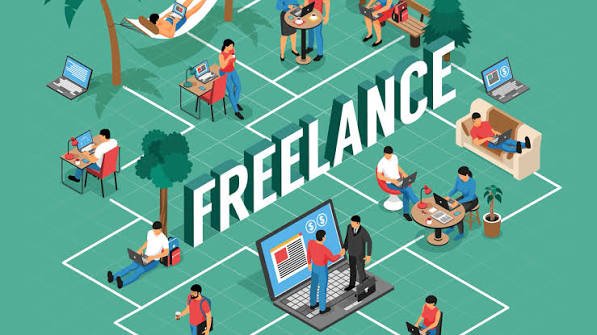
One of the easiest methods for making money from your skills in 2026 is freelancing. There is no need to have an office, or years of professional experience to get started. You must have a practical skill, evidence of delivery and a method of accessing clients.
Freelancing means offering your skill or services to clients without being employed by them permanently. You can work with one client at a time or with several clients simultaneously.
Freelancing isn't simply a matter of registering on a platform and awaiting clients. Competition is fierce and it's very important to know how to position yourself.
Here Are Some Tips To Get You Started:

The first step is to select a skill that you can sell.
1. Begin with something that you know how to do, or something you are willing to learn.
Some popular freelance services are:
- Content writing and copywriting
- SEO
- Graphic design
- Video editing
- Web development
- UI/UX design
- Social media management
- Virtual assistance
- Data analysis
- Email marketing
- CV writing and Resume writing
- Online research
Don't attempt too much, too soon. Focus on a single service and excel at that one service.
Instead of saying: "I do writing, marketing, social media and design, and virtual assistance."
You could focus on a particular skill and say: "My job as an SEO specialist is to help small businesses develop website and blog content that is search engine friendly."
This will make it easier for prospective clients to grasp what you do.
2. Practice the skill
It's not always a case of having to take a high priced course or get another degree to be a freelancer. It requires some knowledge, but you must know what you're doing. Apply courses, tutorials, books and practical projects to develop your skill. More importantly, practice what you have learnt.
Create designs if you're a graphic design student. If you are a learning how to be a badass writer, write and share your works. Develop a website, if you are learning web development. Don't ingest information for months without any creation.
3. Choose a Niche
Specialisation is not required at the outset but a niche might be of great benefit in differentiating.
If you're not a general writer, you can decide to concentrate on:
- SaaS SEO copywriting strategies: A copywriter specializing in e-commerce content creation.
- Copywriting ecommerce business
- CV writing for students going into their post-graduate studies
- Health brand content writing, etc.
Your niche can be based on an industry, type of client, service or problem you solve. That can be changed at a later time.
4. Build a portfolio
When you're beginning, one of the largest concerns you'll have is somebody asking you, “Can I see your previous work?”
You can create samples even if you haven't worked with a paying client. A writer can make sample articles. A designer can make sample branding design projects. An SMM can be responsible for developing a sample content strategy. An Internet developer can create sample websites.
Your portfolio should present potential clients with what you can do.
There's no need for 20 projects. Begin with 3-5 good examples. Create a professional profile in the same way you did for your business profile.
The first thing your freelance profile should communicate is: What do you do? Who do you help? What can you do to support them in reaching that?
Don't put boilerplate into your profile, like, "I'm hard working, passionate and dedicated.”
Rather, concentrate on your service and what you do for people.
For example:
"I help small businesses become more visible on the web using SEO content strategies.”
Next, back up your reasons with your portfolio.
5. Connect Them With the Websites They Are Searching For
Freelance jobs can be obtained from freelance markets, LinkedIn, social media, referrals, direct outreach and professional sites.
There is no need to be at every place. Select two or three channels and understand and apply them correctly.
For instance, LinkedIn is a freelance marketplace and direct outreach combination.
Other sites like ExpertWoka can also help you find remote and freelance work, as well as optimizing your profile professional CV.
6. Write Better Proposals
It is impossible to reach the same objective by sending any of the same proposals to all the clients.
Pay attention to the client's needs and requirements. When a client requests an SEO writer for a financial website, mention your knowledge of SEO and if you have done/reviewed any similar projects, share any work samples.
Don't over-complicate or distract from the proposal. The client doesn't necessarily require your whole life history. They should understand that you care about the problem and are able to help them solve the problem.
7. Don't Compete Only On Price
You are not in a position to become the cheapest freelancer around! It's possible to provide competitive introductory prices while creating your portfolio, but never let low prices be the primary selling point.
Be aware of the value you bring. What you should be selling is something that helps a business save time, attract customers, enhance their business, reach their goals, or solve a problem.
8. Learn To Communicate Professionally
The technical aspect is not the only thing clients are interested in. Good communication matters.
Respond on time. Seek clarification in cases of uncertainty. Confirm deadlines. Provide information as needed.
Do not be silent when something is wrong that could impact delivery. When it comes to professional communication, it can make one project into another project, continuously.
9. Use AI Wisely
AI has revolutionized freelancing, but it has not rendered highly skilled professionals unnecessary.
Take advantage of AI tools, but not at the expense of your judgment. It can assist with research, brainstorming, organisation, editing and repetitive tasks. However, you will still have to check the result, double-check information and exercise your knowledge and skills.
By mastering the integration of AI tools and core business abilities, the freelancers who discover the art of this combination can come to be more efficient and competitive. Freelancers that learn to merge AI tools with genuine professional skills can turn into more efficient and competitive.
10. Watch Out For Scams
Not all freelance jobs are legit.
Be careful if someone:
- Asks you to pay before giving you a job
- Offers unusually high wages for little work.
- Asks for too much personal and sensitive data
- Tricks you into paying with a different payment method.
- Sends links or files that appear suspicious
- Asks for a large amount of unpaid work
If the offer seems too good to be true, don't rush to take it. Do your due diligence. Getting your first client is exciting but don't let that excitement blind you from the obvious warning signs.
After you begin your freelancing career, you are not just performing projects for customers. You have to locate clients, market yourself, run projects, price and develop relationships as well.
If a client doesn't come right away, do not get discouraged.
Concentrate on mini-goals:

Master the skill, develop a portfolio, establish your profile, follow through, secure your first client, provide superb service, use it repeatedly, create repeat business.