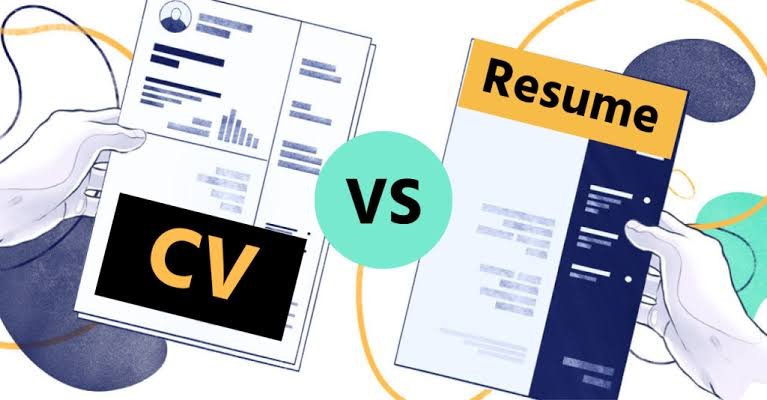
If you have ever applied for a job and wondered whether you should submit a CV or a resume, you are not alone. The terms are often used interchangeably, especially in countries like Nigeria, where people commonly use "CV" to refer to the document they submit when applying for jobs. It's important to note that a CV and a Resume are not the same thing.
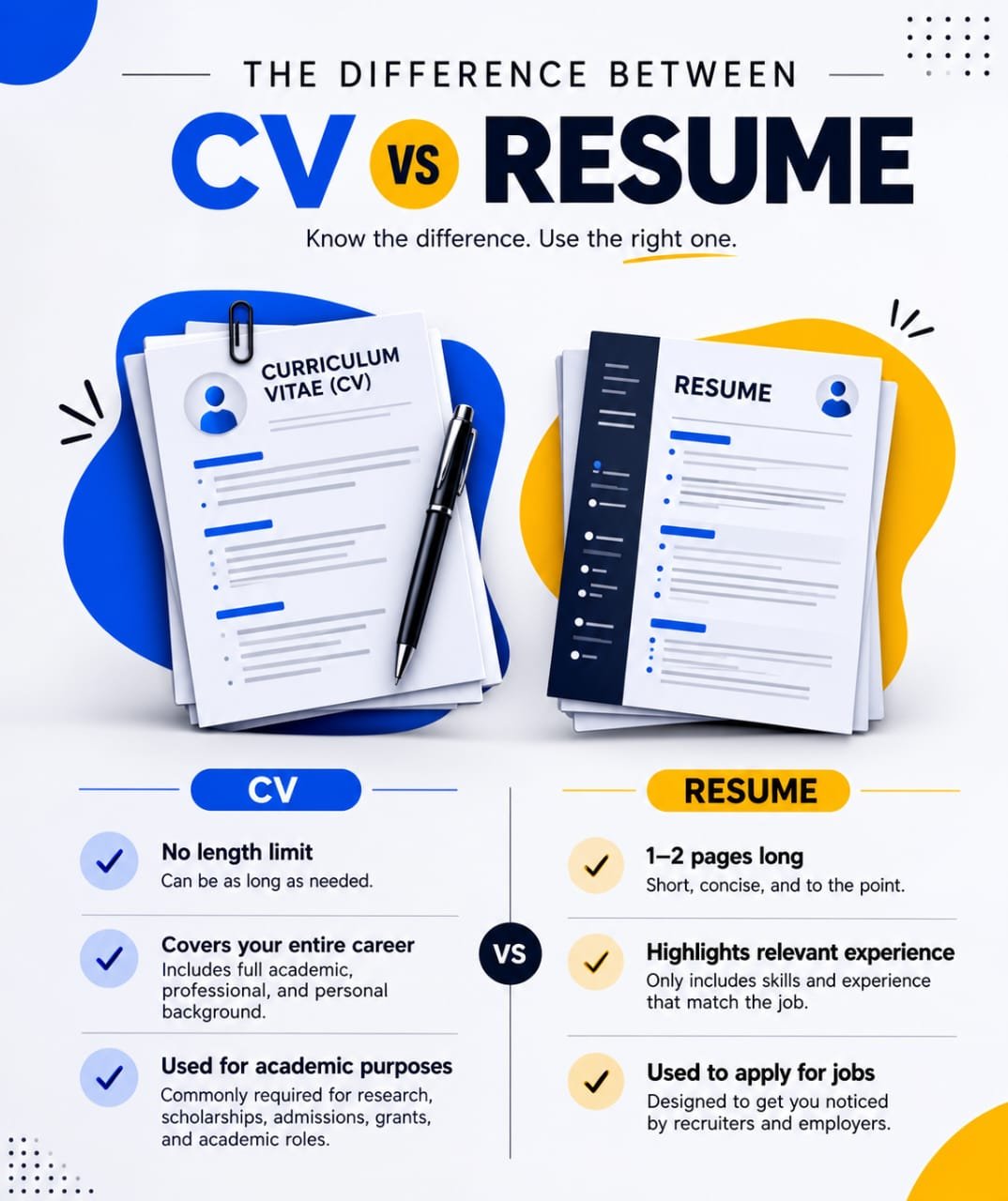
The main difference comes down to content, length, purpose, and how much detail you should include.
Let's break it down:
What is a CV?
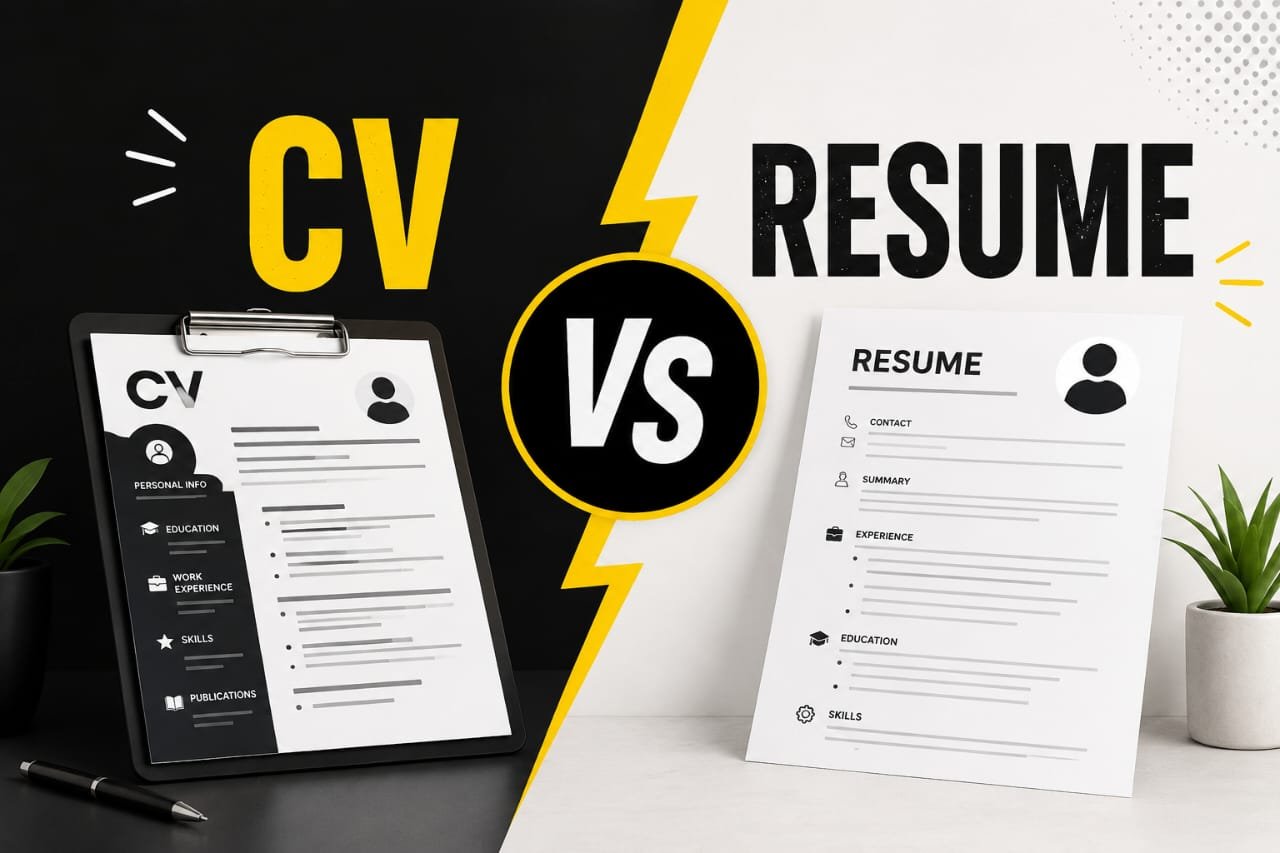
CV stands for Curriculum Vitae, a Latin word which means "Course of life." It is a detailed record of your academic and professional background. It can include your education, work experience, research, publications, certifications, professional memberships, awards, presentations, skills, and other relevant achievements.
A CV can be several pages long, especially for people with extensive academic or professional experience. For instance, someone applying for an academic, research, medical, or university position may need a detailed CV that shows their academic and career history.
A CV length can be from 2-4 pages or more depending on all your academic achievements. The goal should not be to hit a particular page count, the goal is to provide enough relevant information to demonstrate your suitability for the position without making your recruiter or academic panel search through unnecessary details. A CV is commonly used for academic and professional jobs. It is also used for international scholarship applications for Masters and PhD.
What is a Resume?
A resume is a shorter document designed to highlight the experience, skills, and achievements that are most relevant to a particular job. Instead of documenting everything you have done, a resume focuses on the information that helps an employer understand why you are a good fit for the position.
A resume is usually more concise and is often tailor to a specific application. For example, if you are applying for a digital marketing position, your resume should emphasize relevant marketing experience, SEO, analytics, content creation, campaigns and other measurable results rather than listing every unrelated job you have ever done. It is commonly used for corporate, remote, and professional jobs. It's often 1-2 pages.
Important Side Note: The Difference also Depends on Country
The terms CV and Resume do not mean exactly the same thing everywhere.
In the United States, a resume is generally the standard document for job applications, while a CV is commonly associated with academic, research, medical and scholarly positions.
While, in the United Kingdom and many other countries, including Nigeria, employers commonly use the term CV for the document submitted when applying for jobs.
So, if a Nigerian employer asks you to submit your CV, they usually mean your professional job application document. They're not necessarily asking for the lengthy academic document that an American employer might call a CV.
So, Which One Should You Use?
The answer depends on where you are applying and what type of position you are applying for. If you are applying for a typical corporate, remote, or professional role, you should get a resume which can also be termed CV for some countries.
If you are applying for an academic or research position, you will need a more detailed academic CV.
If you are applying internationally, especially to companies in countries where the distinction between CV and Resume is more strictly observed, stick to their term and work with it's true meaning and requirements.
What really matters in both documents is if it clearly communicates; who you are, what you can do, what you've achieved, and why you're relevant to the role or position. A beautifully designed CV won't compensate for irrelevant experience, vague description, or missing evidence of your skills and achievements. Don't treat your CV or Resume as a record of everything you've ever done; treat it as a strategic document designed to get you closer to an interview.
Looking for a more effective CV/Resume consultant? ExpertWoka provides career tools and services designed to help professionals build stronger, job-ready profiles and improve your chances in today's competitive job market.