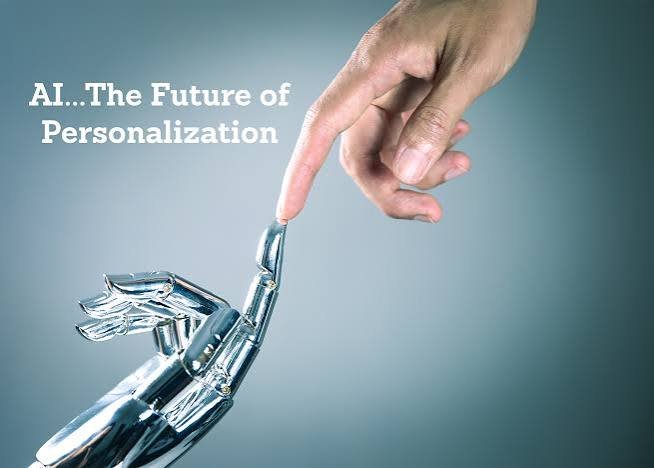
AI assistants are becoming better at remembering context, understanding preferences and giving answers that feel less generic. That sounds like an obvious improvement. But there is a catch: personalization can go wrong.

An AI can misunderstand something from a previous conversation, make an assumption that isn't supported by the information it has, or bring up something that technically relates to a question but doesn't actually help answer it.
As AI becomes more personalized, someone has to test those situations. That is creating an interesting area of work around AI quality and evaluation.
It’s Not Just About Finding Wrong Answers AI evaluation isn't always about spotting an obvious mistake. Sometimes, two answers can both look perfectly reasonable, but one is more useful, better grounded in context or more appropriate for the user. That is where human judgment becomes important.
An evaluator might compare responses, test different prompts, check whether an AI has interpreted context correctly, or explain why one response works better than another. The work requires attention to detail, strong comprehension and the ability to make consistent judgments. And importantly, it doesn't necessarily require someone to be a machine-learning engineer.
A Different Kind of AI Work

The growing AI job market is creating opportunities that sit between technology and traditional professional skills.
Someone with strong writing skills may be useful for evaluating language. A researcher can assess whether information is properly supported. A linguist can examine how an AI handles language. Someone with a background in law or policy may be particularly comfortable analysing rules, context and edge cases.
The common thread isn't necessarily technical expertise. It is good judgment.
That is becoming increasingly valuable as companies move from simply asking, “Can the AI answer this?” to more complicated questions such as, “Did it understand the user?” and “Was this actually the right answer?”
Turing Is One Example of Where This Is Heading

This shift can already be seen in the opportunities appearing across the AI industry.
Turing currently has an AI Quality Analyst – English opportunity focused on evaluating personalized AI experiences. The position involves assessing how an AI uses contextual information and whether its responses are relevant and helpful.
It is currently listed among the Trending opportunities on ExpertWoka, alongside other AI training and evaluation roles.
The role itself is worth looking at, but the bigger story is what it represents.
AI companies increasingly need people who can test systems from a human perspective.
The Interesting Part Is What Comes Next

AI is moving quickly from tools that simply respond to instructions toward assistants that can understand more about the person using them. That creates a new set of problems to solve.
1. How much context is useful?
2. When does personalization become an incorrect assumption?
3. Can an AI distinguish between something that is relevant and something that is merely available?
4. And perhaps most importantly: can it make a response better without making it feel strange?
These aren't questions that can always be answered by writing more code.
They require people who can look at an AI response and recognise the difference between something that sounds good and something that actually works. That is why AI quality work is becoming an increasingly interesting part of the AI employment landscape.
The technology may be getting smarter, but someone still has to decide whether it is getting better.
Looking for opportunities in AI training, evaluation and remote work? Explore the latest roles on ExpertWoka.